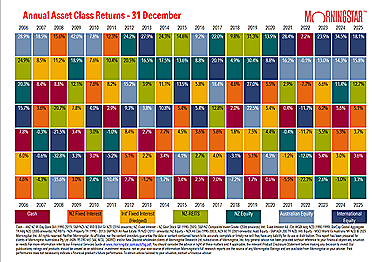
In March 2026, Morningstar released its biannual Asset Class Gameboard, showing the performance of seven major asset classes over the last 20 years to December 2025.
While the gameboard does a good job of highlighting the winners and laggards of each year, the variation in performance shows how difficult it is to pick future winners, and demonstrates the value of Portfolio Diversification.
Understanding Diversification when you invest
Diversification is a key principle in investing that helps reduce risk by spreading investments across different asset types.
What Is Diversification?
Diversification means holding a mix of assets like stocks, bonds, cash, and property. Each asset class behaves differently, so spreading your investments reduces the chance that one loss will severely impact your portfolio.
Why Diversify?
Markets can be volatile. A diversified portfolio is better able to handle market swings and reduces the risk of large, permanent losses. The aim is to protect your investment goals over the long term.
How to Diversify
Across asset classes: Commonly, investors hold a combination such as 60% equities and 40% bonds/defensive.
Within asset classes: e.g. when you’re looking at the biggest Australian companies, the majority are stocks are in the mining and financial sectors, so diversifying into other sectors or international markets can reduce risk.
Can You Diversify Too Much?
Yes. Holding too many similar investments can increase costs and not necessarily improve financial returns. It’s important to understand and check what you own and avoid overlapping exposures.
Dividend Reinvestment Plans (DRPs)
DRPs (offered in Australia) use dividends to buy more shares of the same company – you ca elect to do this or it’s automatic. However, this can increase concentration risk if you don’t manage your holdings carefully. Early-on, reinvesting dividends can boost growth, but later it may be better to take dividends as cash to buy into other companies.
Summary
Diversification is about managing risk by balancing your holdings. The right mix depends on your financial risk tolerance and investment goals. It’s best to avoid over-diversifying, and focus on assets that align with your objectives.
Next steps
You’re most welcome to contact us, either by email or using the CONTACT US NOW button elsewhere on this page, to discuss how to best allocate your funds to you can manage your cash flow and be more in control of your financial health.
* You’ll need the free Adobe Acrobat Reader app. Get it here.
Want to get ethical?
We’ll help assess your intended investment against your priorities. We’ll work through what ethical mean to you, and how the companies you’re interested in manage environmental, social and governance issues (ESG) in their business.
Get our Guide to Ethical Investment with everything you need to get started
Stay on top of your finances
Getting your finances in order is one thing. Staying on top of them is something else again. A change in government policy, new legislation or amended regulations can have a powerful impact on how your finances are structured.
Subscribe to our regular newsletter to stay up to date with all the latest developments and changes.
Uncertain what to do next? Got questions?
Get certainty, direction and answers. Contact us now to talk through any issues you’ve got.
Together, we’ll get your money doing what you care about.